What is the meaning of eloping in 2026? The emotional truth behind the choice
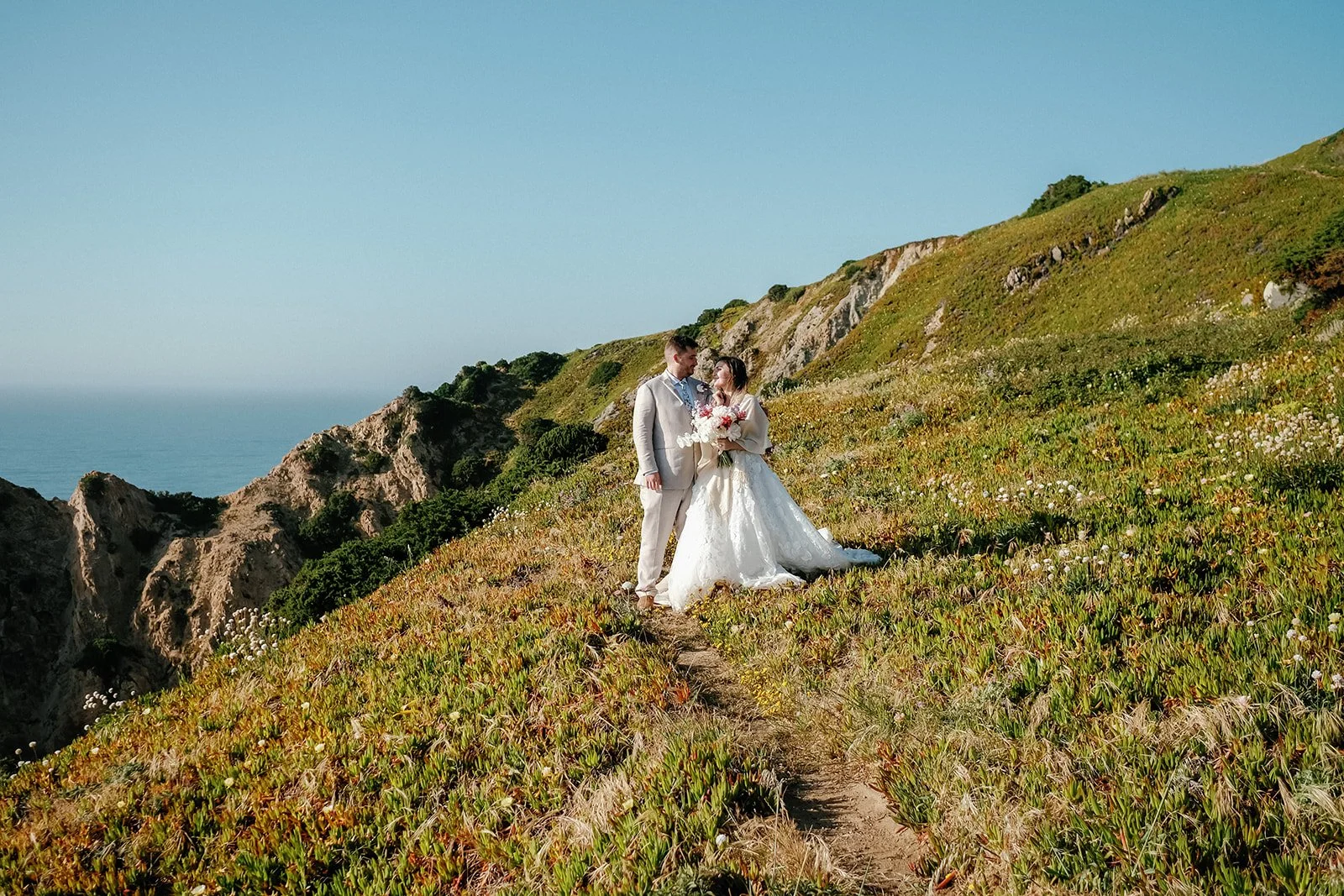
Elopement means a small, intimate wedding where a couple chooses to marry privately, usually without a large guest list or the conventional celebrations that surround it. The meaning of eloping has shifted significantly in recent years: where it once suggested secrecy or impulse, it now represents one of the most intentional, considered choices a couple can make.
Ask most people what 'eloping' means, and they'll picture a rushed escape: two people sneaking off, avoiding family, choosing something small because they couldn't have something big. That version of eloping is almost entirely myth. And for the couples who choose it today, it misses the point entirely.
What does it mean to elope today?
What does it mean to elope, in the modern sense? It is to make a deliberate, experience-led choice about how you want to begin married life. Not about avoiding something, but about moving toward something more personal, more considered, and more true to who you are as a couple. The meaning of elopement has never been richer, or more relevant, than it is right now.
When couples come to the decision to elope, it rarely happens impulsively. It tends to arrive after a period of genuine reflection, after realising that the version of a wedding they were building for others was slowly pulling them away from the version they actually wanted.
Eloping is the choice to stop designing a day around expectations and start designing it around what actually matters. It is the couple who would rather stand at the edge of a cliff in the Dolomites than at an altar they didn't choose. It is the pair who wants to remember the smell of the air and the weight of the moment, not the seating chart negotiations that preceded it.
That clarity is powerful. And it is worth protecting.
Elopement vs a traditional wedding: what is the difference?
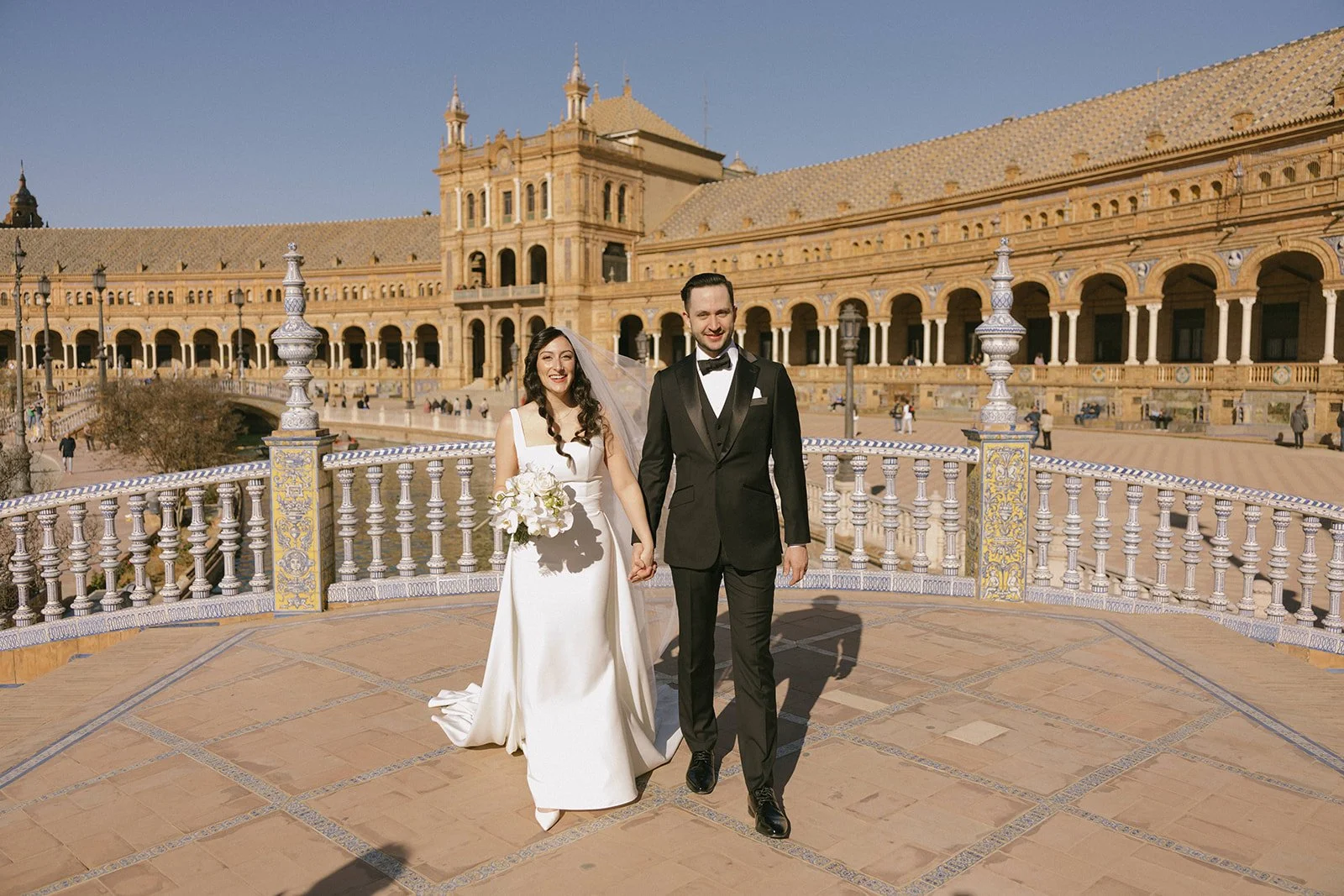
At its simplest, an elopement means a private, intentional ceremony focused entirely on the couple. Here is how it differs from a traditional wedding:
Guest list: elopement = 2 to 10 people; traditional wedding = 50 or more guests
Ceremony: elopement = personal and intimate; traditional = formal and structured
Planning: elopement = curated and experience-led; traditional = longer timeline, more logistics
Focus: elopement = designed around the couple; traditional = designed around the occasion and the guests
The couples who choose to elope are often those who feel the gap most acutely, caught between what a wedding is supposed to look like and what they actually want it to feel like. They are not running away. They are running toward something more honest.
There is a particular kind of courage in that. Choosing something intimate when everyone around you expects something large is not a compromise. It is a conviction.
Presence over performance
One of the most consistent things couples say after eloping is that they were actually there. Fully present. Not managing guests, not performing for a room, not moving through a choreographed sequence of events designed for an audience.
This is perhaps the deepest part of the elopement meaning: the chance to inhabit the day rather than host it, to feel the weight of what you are choosing, without distraction, to look at your partner and know that everything around you, the location, the details, the rhythm of the day, was built around the two of you and nothing else.
That level of presence is rare in any celebration. And once experienced, it is rarely regretted. Most couples say it was exactly right.
An elopement is still a wedding, just a better fit
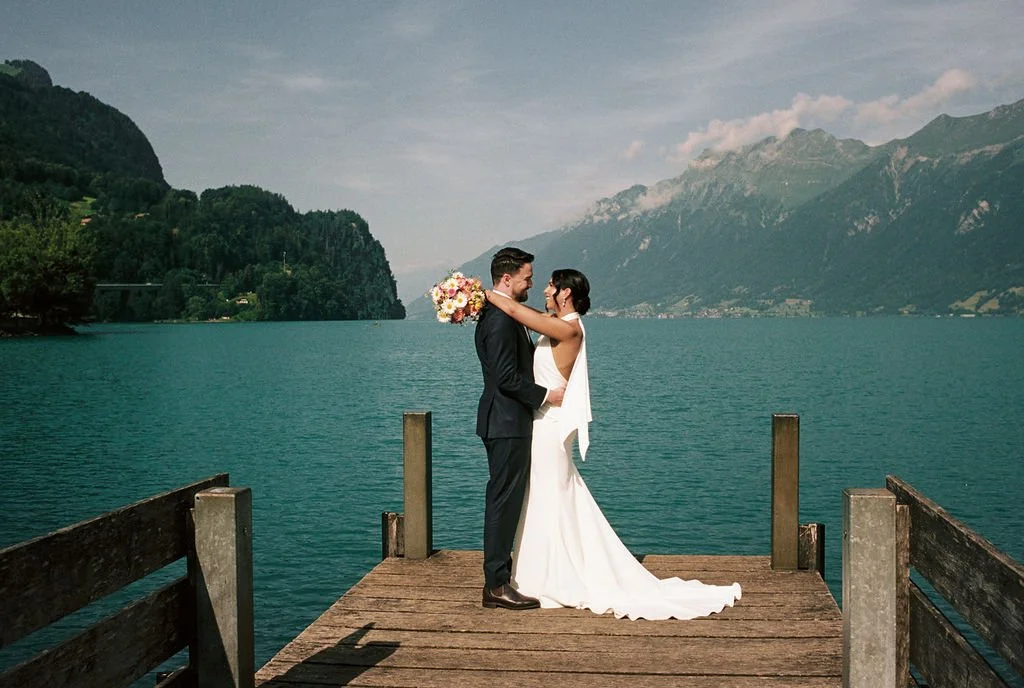
There is a misconception that eloping means sacrificing beauty, ceremony, or meaning. That it is somehow less. In reality, the couples who elope often end up with something far more considered: a ceremony that reflects who they are, a location they genuinely wanted to be in, and a day that was built with intention rather than obligation.
A well-planned elopement includes a personalised ceremony, curated photography, a carefully chosen bouquet, and full coordination on the day. For couples who want a more immersive experience, the day can extend further: more time, more story, and a private dinner to close it. The difference from a traditional wedding is not in the quality. It is in who the day is designed for.
Discover our Elopement Packages
Classic Elopement Packages
Premium Elopement Packages
Why couples choose to elope across Europe
Travel changes something. Stepping into an unfamiliar landscape, somewhere beautiful, somewhere that carries no previous associations. It creates a kind of openness that is difficult to access at home. It strips away the ordinary and invites something more alert, more alive.
This is part of why so many couples choose to elope abroad. Not simply for the photographs, though those are rarely disappointing, but for what the experience of being somewhere new does to the quality of the day. It becomes an adventure as well as a commitment. It becomes a story.
Europe, in particular, offers an extraordinary range of settings: the Amalfi Coast and Tuscan hills in Italy, the cliffs of the Algarve in Portugal, the warmth of Andalusia in Spain. Each location adds its own character to the day and to the memory.
Check out our destinations in Europe
A choice you will feel proud of
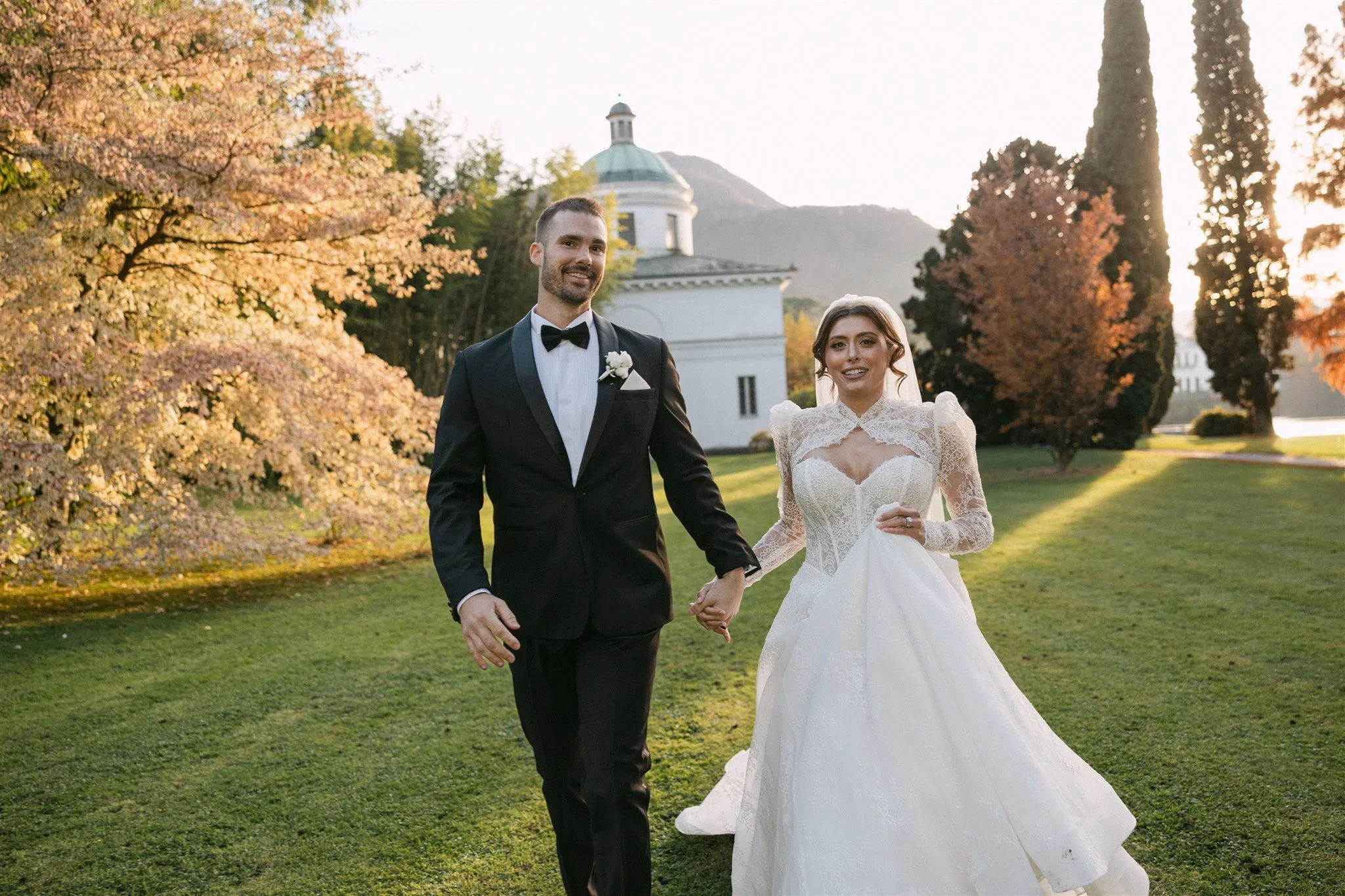
The elopement meaning, at its core, is this: choosing your own path, on your own terms, with full intention. It is the decision to begin a new chapter not under the weight of what was expected, but in the full clarity of what you wanted.
Years from now, what couples tend to remember is not the size of the room or the length of the guest list. They remember how it felt to be standing there, present, certain, and exactly where they chose to be.
For many couples, understanding the true meaning of elopement is the moment something shifts. It stops being a lesser alternative and starts being the obvious choice. Not a compromise, but a commitment to doing things differently, and doing them well.
When couples ask what it means to elope, the honest answer is this: it means choosing presence over performance, intimacy over spectacle, and a day that will still feel entirely right years from now. That is not a small thing. It is, for many, the most meaningful decision in the whole process.
That feeling is worth planning for.
Why plan your elopement with a specialist?
Eloping may feel simpler than a traditional wedding, but a beautifully executed elopement still requires real planning: the right location, the right vendors, the right permits, and a day that flows. Without local knowledge and experience, even the most considered couples can find themselves navigating logistics that pull them away from the experience itself.
Working with an elopement planner means every decision is made in the right order, with the right guidance. The location is chosen for how it will actually feel on the day. The vendors are curated to match the couple's style. The itinerary is built to give the day space and rhythm. And on the day itself, everything is coordinated so the couple can be fully present.
For couples who want a day that feels unmistakably like them, with none of the overwhelm, specialist planning is not a luxury. It is the difference between a day that is managed and a day that is genuinely lived.
Plan your elopement with Somewhere Crazy
Somewhere Crazy designs and manages experience-led elopements across Europe for couples who want a wedding day that feels unmistakably like them. From concept to coordination, every detail is handled with care.
If you are ready to start planning, book a discovery call and we will help you build something worth remembering:
Book your free discovery call here
Frequently asked questions about elopement meaning
-
Elopement means choosing to marry privately and intimately, usually with a very small group or just the two of you, in a location that feels personal and intentional.
-
A micro-wedding typically includes 20 to 50 guests and still follows a more traditional wedding structure. An elopement is smaller, more flexible, and designed entirely around the couple rather than the occasion.
-
Couples elope to focus the day entirely on each other, to avoid the pressure of traditional expectations, to marry in a location they love, and to create a day that feels true to who they are.
-
Most couples who elope choose a symbolic ceremony, which focuses entirely on the experience of the day without legal registration. In some locations it is possible to arrange a legal ceremony abroad, though this typically involves significant paperwork, long timelines, and requirements that vary by country and nationality. For this reason, many couples choose to marry legally in their home country and celebrate their elopement separately. That said, every situation is different. The best first step is to speak with your planner about what is possible for your specific location and nationality.
-
There is no fixed rule. Most elopements involve just the couple or a very small group of close family and friends, typically under 10 people.